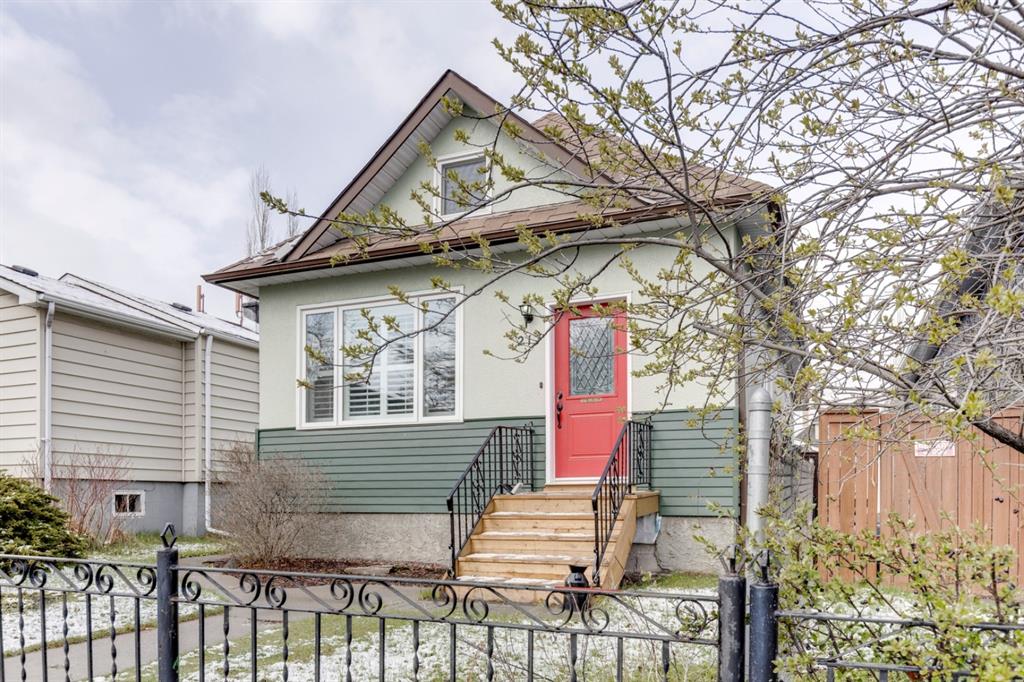
Calgary has a reputation for being a driving city, and to be fair, there’s some truth to that. We’re a large, spread-out city, and depending on where you live and work, having a vehicle can make life considerably easier.
But does that mean you need a car to live well in Calgary?
Not necessarily.
I’ve spent enough time in Calgary’s communities to know that your experience of the city can look completely different depending on where you choose to live. In the right neighbourhood, it’s entirely possible to walk for groceries, meet friends for dinner, grab a coffee, access the pathway system, and take transit to work without organizing your entire day around a vehicle.
If living a more walkable lifestyle is important to you, the key is choosing your community carefully. Here are a few Calgary neighbourhoods I’d put near the top of the list.
Sunnyside and Kensington
Kensington and Sunnyside are probably two of the first places I’d recommend to someone who wants to live in Calgary without depending heavily on a car. The communities sit just across the Bow River from downtown, and the Sunnyside Train Station makes commuting into the core particularly convenient. Depending on where you live and work, walking or cycling downtown is also completely realistic.
What makes this area work so well, though, is how much you can access without leaving the neighbourhood. Kensington Road and 10 Street NW have restaurants, shops, grocery options, fitness studios, and everyday services, while Riley Park gives residents a substantial green space right in the community.
The location also connects particularly well with the rest of the inner city. The Peace Bridge provides an easy walking and cycling connection across the Bow River, and the surrounding pathway system can take you downtown, along the river, or into neighbouring communities without needing to get in a car.
That’s what I think makes Sunnyside and Kensington such a strong option for a car-free lifestyle. You’re not simply living close to downtown. You have many of the things you need day to day within the community, plus several practical ways to get beyond it.
For someone who wants the convenience of inner-city living but still values parks, neighbourhood character, and a strong sense of community, Sunnyside and Kensington offer a pretty compelling balance.
Beltline
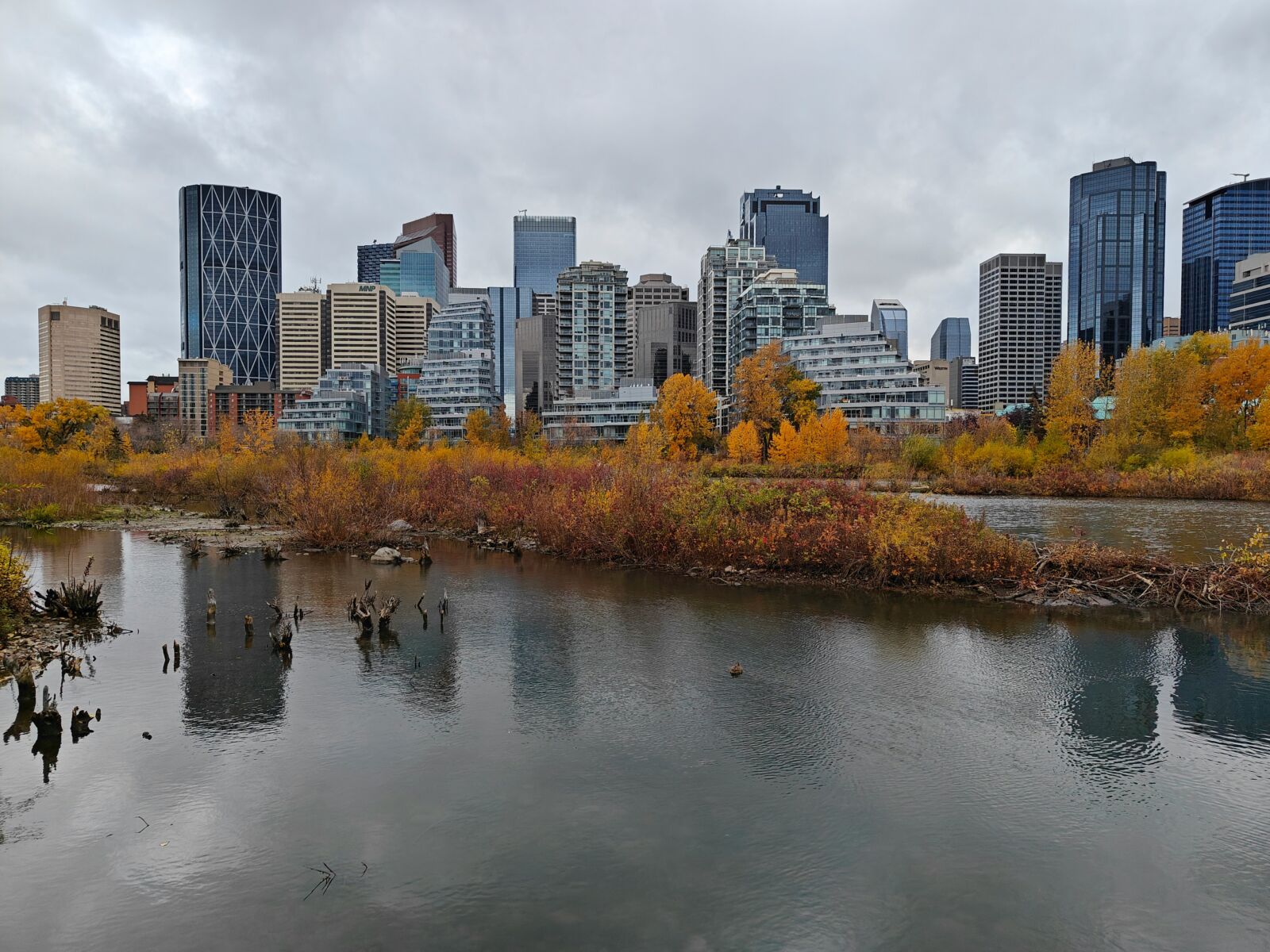
If your priority is being able to walk to almost everything, Beltline deserves serious consideration.
Living here puts you close to downtown employment, restaurants, grocery stores, gyms, cafés, nightlife, and entertainment. You’re also well connected to Calgary Transit, with the downtown CTrain corridor nearby and multiple bus routes running through the area.
Then there’s 17th Avenue SW.
It’s one of Calgary’s busiest pedestrian areas for a reason. Restaurants, patios, shops, coffee spots, and services are concentrated along the avenue, and having so much within a relatively small area makes everyday errands considerably easier without a vehicle.
The Beltline won’t suit everyone. It’s denser and busier than many Calgary communities, and you’re trading the larger yards and quieter streets of the suburbs for convenience. For the right person, though, that’s exactly the point.
If I were moving to Calgary without a vehicle and wanted an urban lifestyle, Beltline would absolutely be on my list.
Mission and Cliff Bungalow
Mission and Cliff Bungalow offer many of the same conveniences as Beltline, but the atmosphere feels a little different. You’re still close to the action, but there are quieter residential streets and a stronger neighbourhood feel that appeals to people who want an urban lifestyle without necessarily living right downtown.
Fourth Street SW is really the heart of the area, with grocery options, restaurants, shops, fitness studios, and everyday services all within walking distance. You’re also close to the Elbow River pathway system and MNP Community & Sport Centre, while 17th Avenue and downtown are both easily accessible on foot, by bike, or by transit.
That combination makes everyday life surprisingly convenient without a car. You can run errands along Fourth Street, head to Lindsay Park or the river for a walk, meet friends on 17th Avenue, and commute into the downtown core without having to drive between each stop.
What I like about Mission and Cliff Bungalow is that you get many of the benefits of inner-city living without losing that sense of being part of a neighbourhood. For buyers who value walkability and want most of their day-to-day needs close to home, I think both communities are well worth a closer look.
Bridgeland
Bridgeland is another community I find myself recommending quite often, and not just because it’s close to downtown.
Over the last several years, it’s developed into one of Calgary’s most complete inner-city neighbourhoods. There are restaurants, parks, shops, everyday services, and a CTrain station all within the community, while downtown is just across the river.
For someone living without a car, that combination makes a real difference. You can pick up groceries at Bridgeland Market, spend time at Murdoch Park, walk or cycle toward the Bow River pathways, and take the CTrain downtown without having to plan your day around a vehicle. The Calgary Zoo and St. Patrick’s Island are also nearby, giving you even more to do within walking distance.
Bridgeland also has something that’s harder to measure on a map: it feels like a community. People are out walking, local businesses are busy, and there’s a neighbourhood energy that makes it enjoyable to spend time close to home.
For someone moving to Calgary who wants both walkability and a strong community atmosphere, Bridgeland would be high on my list.
Downtown and East Village
Living downtown is the obvious choice for some people, particularly if you also work downtown.
You have immediate access to Calgary’s CTrain system, and much of the downtown CTrain corridor operates within the city’s free fare zone. That can make short trips across the core particularly easy.
East Village has also changed the way people live downtown. The RiverWalk, Central Library, restaurants, public spaces, and proximity to both the Bow River and St. Patrick’s Island have created a much more residential feel than Calgary’s downtown core traditionally offered.
There are trade-offs, of course. Condo living isn’t for everyone, and depending on where you regularly need to travel, there will still be occasions when a car, taxi, rideshare, or car-sharing option makes life easier.
But if your work and lifestyle are centred around Calgary’s core, owning a vehicle can become much less important.

Can You Really Live in Calgary Without a Car?
I think the honest answer is yes, but location matters enormously.
Calgary is still a large city. If you live in one of the outer suburban communities and regularly commute across town, life without a vehicle is going to be more challenging. That’s simply the reality of how Calgary has developed.
The experience is very different in the inner city.
If your home, work, grocery store, favourite restaurants, and transit connections are all relatively close together, you may find that you use a vehicle far less than you expected. Calgary also has an extensive pathway network, which makes walking and cycling another practical option for getting around certain parts of the city.
This is why I encourage buyers to think beyond the house when they’re choosing a community. A beautiful property at the right price isn’t necessarily a great fit if getting anywhere you want to go requires a 30-minute drive.
Where you live has a huge impact on how you experience Calgary every day.
Final Thoughts
One of the things I like most about Calgary is that there isn’t one right way to live here.
Some people want a large backyard, a three-car garage, and easy access to the ring road. Others would happily trade all of that for the ability to walk downstairs, grab a coffee, and be downtown in ten minutes.
Neither is better. They’re simply different lifestyles.
If living without a car, or simply using one a lot less, is important to you, I’d start by looking at communities like Sunnyside and Kensington, Beltline, Mission, Bridgeland, and East Village. Spend some time walking through them, try the commute you would actually make, visit the grocery store, and see how the neighbourhood feels on an ordinary weekday rather than just a Saturday afternoon.
That’s often when you figure out whether a community really works for you.
If you’re trying to find a Calgary neighbourhood that fits the way you want to live, I’d be happy to help you explore the options. Finding the right home matters, but finding the right location can change your entire experience of the city. Contact me today.